 Ask About Our Discounts!

LVP vs Tile Flooring in Colorado: The 2026 Homeowner’s Comparison Guide
In the Colorado Rockies, your flooring isn’t just a design choice; it’s a frontline defense against the elements. You’ve likely felt the bite of a freezing subfloor on a January morning or spent too much time scrubbing mud from grout lines after a spring hike. When you’re weighing LVP vs tile flooring Colorado homes require more than just aesthetic appeal. You need a surface that handles the thermal shifts of our high-altitude climate without cracking or warping under the pressure.
We believe your home should be a sanctuary that reflects your values and stands the test of time. It’s frustrating to worry about large dogs scratching your investment or the complexity of a massive renovation. This guide shows you how to choose a floor that lasts 20 years and simplifies your life after a long day of skiing. We will break down 2026 material trends, including the impact of the new Colorado Model Low Energy and Carbon Code, so you can make a choice that elevates your home’s beauty and its resale value.
Key Takeaways
- Determine which material wins the LVP vs tile flooring Colorado debate based on your home’s specific thermal needs and altitude.
- Compare installation timelines to see how you can achieve a beautiful transformation in your home in just a few days.
- Identify the specific engineering that makes LVP a resilient choice for families with large pets and active outdoor passions.
- Learn why tile remains the gold standard for high-moisture areas and how it serves as a lasting legacy for your property.
- Master the room-by-room strategy for balancing underfoot warmth with extreme durability to maximize your daily comfort.
The Great Flooring Debate: Why LVP and Tile Dominate Colorado Homes
Choosing new floors is more than a home improvement project; it’s a fundamental shift in how you experience your daily life. When we talk about the LVP vs tile flooring Colorado homeowners need, we’re looking for a balance between resilient performance and timeless beauty. Vinyl flooring, specifically Luxury Vinyl Plank (LVP), is a multi-layered synthetic product designed to mimic the warmth of wood or the elegance of stone. On the other hand, tile is a kiln-fired clay product, either ceramic or porcelain, celebrated for its legendary durability and water resistance.
To better understand how these two materials stack up against each other, watch this helpful comparison:
Why are so many neighbors in Denver and Highlands Ranch moving away from traditional carpet? Carpet acts as a magnet for the dust and allergens common in our dry climate, requiring constant deep cleaning. By choosing LVP or tile, you aren’t just buying a surface; you’re investing in a transformation that simplifies maintenance. These materials allow you to spend less time scrubbing and more time enjoying the mountains. We see this as a mission to reclaim your time while elevating your home’s intrinsic value.
The Impact of the Colorado Climate on Your Floors
Our state’s unique environment presents specific challenges for interior surfaces. With over 300 days of annual sunshine, UV exposure can fade lesser materials, but modern LVP and tile are engineered to resist discoloration. The low humidity levels in the Rockies mean that materials must be stable; they shouldn’t expand or contract wildly as the seasons shift. Then there’s the “Snow Factor.” Whether it’s melting slush from your boots or mud tracked in from a weekend on the trails, your floors must handle moisture without hesitation. This makes waterproof LVP and dense porcelain tile the preferred choices for those who live an active, outdoor lifestyle.
Aesthetic Trends in Highlands Ranch and Denver
In 2026, the “Modern Mountain” aesthetic has taken center stage across the Front Range. This style favors wide-plank LVP in light oak tones or large-format porcelain tiles with matte stone finishes. These choices provide a clean, expansive foundation that perfectly complements professional interior painting Highlands Ranch residents use to brighten their living spaces. By pairing these durable floors with the right wall colors, you create a cohesive environment that feels both sophisticated and grounded. We see a strong shift toward organic textures that bring the beauty of the outdoors inside, ensuring your home remains a peaceful retreat that’s easy to maintain after a long day of hiking or skiing.
Luxury Vinyl Plank (LVP): The Resilient Solution for Active Families
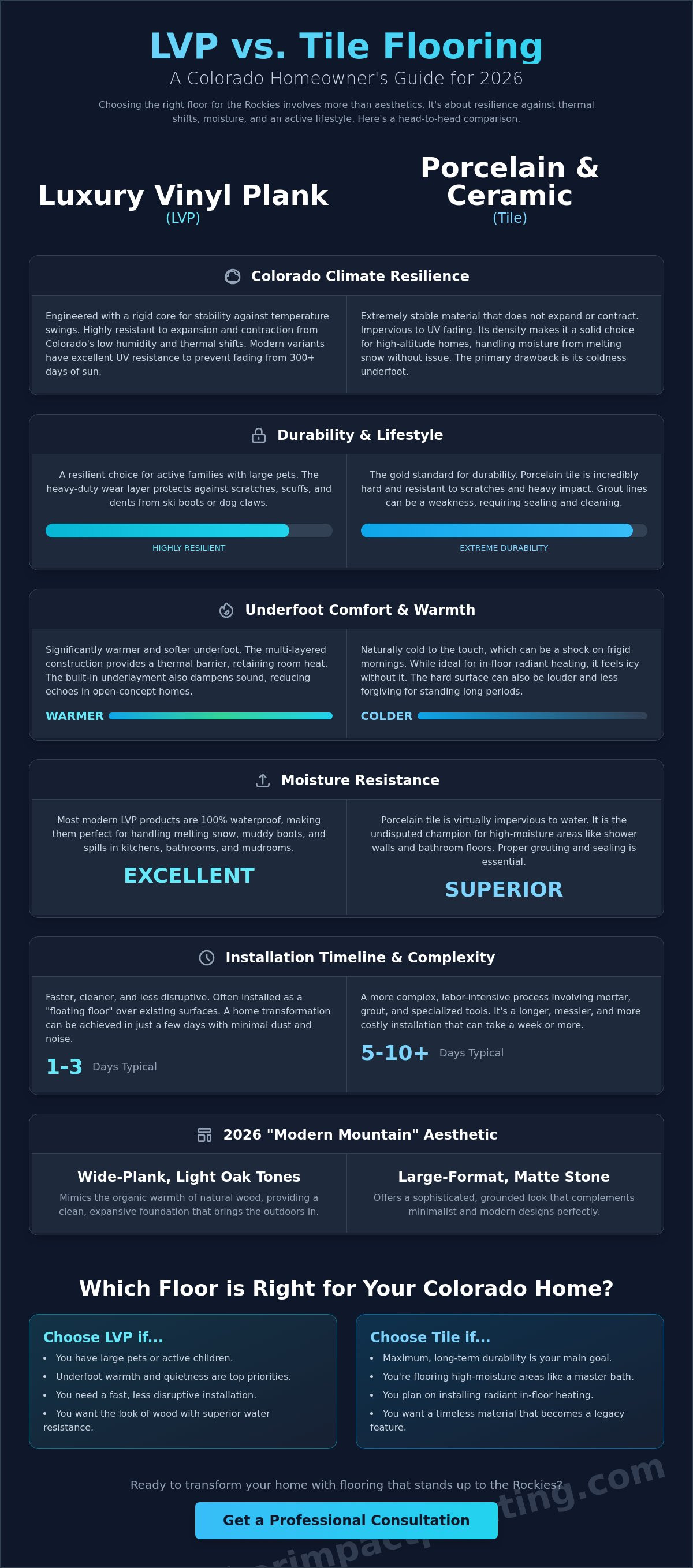
When you step into a home that feels truly transformed, the flooring often does the heavy lifting. Luxury Vinyl Plank, or LVP, has rapidly become one of America’s Favorite Floors because it balances high-end aesthetics with rugged practicality. When evaluating LVP vs tile flooring Colorado residents often prioritize a surface that handles both heavy snow boots and playful paws. LVP achieves this through a sophisticated four layer construction. A heavy duty wear layer protects against abrasions; a high definition image layer provides the “Modern Mountain” look; a rigid core ensures stability; and a built in underlayment adds cushion and sound dampening.
One of the most immediate benefits you’ll notice is the “warmth” factor. On a frigid January morning in Denver, stepping onto an LVP floor feels significantly more comfortable than the icy shock of unheated stone. This material acts as a thermal barrier, retaining ambient room temperature rather than leaching it away. For open concept homes in Highlands Ranch, LVP also addresses the “Quiet Factor.” The multi layered design absorbs the echo of footsteps and dropped toys, creating a more peaceful environment for your family to thrive. If you’re ready to see how this material can change your daily rhythm, our team provides professional LVP flooring installation tailored to your space.
Durability for Pets and High-Traffic Areas
For families with large dogs, the wear layer is the most critical specification. We recommend a wear layer of at least 20mil to ensure your investment resists deep scratches from claws. LVP is the conscientious choice for busy households because it’s designed for real life. Unlike natural materials that might stain or require specialized sealants, LVP is 100% waterproof when using SPC (Stone Plastic Composite) or WPC (Wood Plastic Composite) cores. If a single plank ever sustains significant damage, it can often be replaced without tearing up the entire room, a luxury you don’t have with cracked ceramic.
Installation Efficiency and Subfloor Flexibility
The “floating floor” system is a game changer for Colorado renovations. Because LVP planks click together, they can often be installed directly over existing level surfaces, which saves you from the mess of a full demolition. This process is much faster than the multi day labor required for tile. In our dry climate, we specifically lean toward SPC flooring. Stone Plastic Composite is a dense, rigid core material that won’t expand or contract during our extreme temperature swings, ensuring your floor stays beautiful and gap free for years to come.
Porcelain and Ceramic Tile: The Timeless Standard of Durability
While LVP offers immediate comfort and rapid installation, tile represents a commitment to material integrity that spans generations. When evaluating LVP vs tile flooring Colorado homeowners often choose porcelain for its unmatched density and technical performance. Porcelain is fired at higher temperatures than standard ceramic, making it nearly impervious to moisture and heavy wear. We view a professional tile flooring installation as more than a surface upgrade; it’s the installation of a ‘Forever Floor’ that can outlast your mortgage. This material is a champion of indoor air quality, emitting zero VOCs and providing superior fire resistance to ensure your home remains a safe, healthy sanctuary.
The luxury appeal of tile remains the gold standard for high moisture zones like bathrooms and mudrooms. It offers a level of architectural permanence that synthetic materials simply cannot replicate. By choosing tile, you are investing in a surface that resists the heavy grit and mud common in the Rockies without the risk of surface swelling. This choice reflects a mission to build a home that is both beautiful and fundamentally sound, providing a sense of stability that benefits your family and your property’s long term resale value.
Thermal Mass and Radiant Heating Compatibility
Colorado’s 300 days of annual sunshine provide a unique advantage for tile owners. Dense materials like porcelain act as a thermal heat sink, especially in rooms with large south-facing windows. The floor absorbs solar energy during the day and releases it slowly as the sun sets, assisting in natural temperature regulation. This thermal mass is a hallmark of efficient home design in high altitude climates. If the natural chill of stone is a concern, integrating electric radiant heating systems under the tile is a transformative solution. It turns a cold bathroom floor into a source of deep, consistent warmth on those sub-zero February mornings.
Maintenance Realities: Grout and Sealing
Grout has historically been a primary concern for homeowners, especially in our high dust environment. However, modern engineering has solved many of these traditional pains. We recommend using large format tiles to drastically reduce the number of grout lines in a space, creating a sleek and modern look. When paired with high performance epoxy grout, the surface becomes exceptionally easy to maintain. Epoxy grout is non-porous and stain resistant, meaning it won’t absorb the red mud or grit tracked in from your latest mountain adventure. This approach ensures your entries and sunrooms maintain their luxury appeal without requiring aggressive scrubbing.
LVP vs Tile: The Head-to-Head Comparison for 2026
Deciding between these two powerhouses requires looking beyond the surface. When analyzing LVP vs tile flooring Colorado homeowners must weigh the immediate gratification of a fast install against the generational legacy of stone. A typical LVP project can often be completed in about 2 days, allowing your family to return to your routine almost instantly. In contrast, a professional tile installation is a meticulous process usually spanning 5 to 7 days. This timeline reflects the craftsmanship needed for proper setting, grouting, and curing, ensuring a result that stands as a permanent fixture in your home.
Comfort plays a vital role in your daily well-being. LVP provides a slight “give” that is gentler on your joints during long afternoons preparing meals in the kitchen. It also maintains a neutral ambient temperature, avoiding the biting chill often associated with unheated floors. However, in the high end markets of Highlands Ranch and Denver, buyers in 2026 still view premium porcelain as the ultimate mark of luxury. While LVP offers incredible realism, tile remains the preferred choice for those looking to maximize their home’s appraisal value in master suites and grand entries.
Cost vs. Value: The Long-Term Investment
The upfront material expense is only one part of the story. You must consider the 20 year cost of ownership. LVP is an excellent way to modernize a space with high efficiency, but it may require replacement sooner than a kiln fired product. While tile costs more upfront, its ROI is often higher at resale because it is seen as a permanent, high value upgrade. Regardless of your choice, achieving a flawless finish requires flooring installation Highlands Ranch families can trust for technical precision. If you are ready to transform your living environment, we are here to ensure your new floors are installed with the care and discipline they deserve.
The “Colorado Test”: Mud, Slush, and Dry Air
Our climate puts materials through a rigorous stress test every season. In the mudroom, tile is the undisputed champion for handling the freeze thaw cycle of snow covered boots. It won’t buckle or swell under the moisture of melting slush. However, our notoriously dry winters introduce another factor: static electricity. Some homeowners find that LVP can be more prone to static buildup in low humidity compared to the grounded, natural properties of tile. Maintenance also differs; while LVP only needs a quick damp mop after a weekend hike, tile grout may eventually require professional attention to keep it looking pristine. We believe in providing solutions that respect the unique demands of our environment, helping you choose a floor that serves your life for decades.
Making the Right Choice for Your Highlands Ranch Home
Your final decision in the LVP vs tile flooring Colorado debate depends on the specific rhythm of your household and your long-term vision for your space. LVP serves as the ideal foundation for walk-out basements, high-traffic kitchens, and pet-heavy zones where resilience is paramount. It offers the warmth and quiet your family needs during a busy week. Conversely, tile remains the superior choice for high-moisture bathrooms, mudroom entries, and sunrooms where thermal mass helps regulate our intense mountain sunlight. We often recommend a hybrid approach. By utilizing LVP in living areas and porcelain in entries, you create a home that is both resilient and sophisticated.
This transformation doesn’t have to happen in isolation. Flooring works in tandem with other updates, such as professional cabinet refinishing Highlands Ranch, to create a total kitchen refresh. When you coordinate the textures of your new floors with the finish of your cabinetry, you elevate the entire aesthetic of your home. We see every project as a mission to improve your environment, ensuring that each element contributes to a cohesive and peaceful sanctuary for your family.
Why Professional Installation Matters
We believe a beautiful result is born from a disciplined and detail-oriented process. Professional installation is non-negotiable in Colorado because our state’s expansive soils often cause subfloors to shift and settle. Without expert subfloor preparation, even the highest quality LVP or tile can fail over time. We treat flooring installation as a craft rather than a simple task. This means maintaining clean job sites, providing clear communication, and ensuring that every transition strip and baseboard is perfectly aligned. Our goal is to provide a sense of partnership and reliability that you won’t find with a typical trade business.
Your Next Steps Toward a Transformed Space
Choosing the right partner for your home transformation is a choice of values. We’re dedicated to improving lives and spaces through conscientious craftsmanship and technical expertise. If you’re ready to move forward, we make the process simple and transparent. You can easily schedule an estimate for your flooring or painting project to see how we can bring your vision to life. We also offer the opportunity to combine services, such as painting and flooring, which allows for a more streamlined schedule and multiple service discounts.
Ready to elevate your home? Contact Higher Impact Painting for a free estimate today! We look forward to helping you create a space that reflects your standards and stands the test of time.
Your Journey to a Refined Colorado Home
Deciding on the LVP vs tile flooring Colorado homeowners need requires a clear vision for your family’s daily comfort. You now understand that LVP provides the underfoot warmth and sound absorption necessary for busy living areas, while tile offers a timeless, fire-resistant foundation for your high-moisture zones. Both materials, when installed with precision, solve the persistent pains of tracked-in snow and high-altitude wear. We believe your home is a reflection of your commitment to quality and longevity.
As a locally owned business in Highlands Ranch, we take pride in delivering a comprehensive interior transformation. From flooring and painting to cabinet refinishing, our team ensures clean job sites and clear communication at every stage of the process. We treat your renovation as a means of positive transformation rather than just a simple maintenance task. Transform your home with expert flooring and painting, and get your free estimate!
We are ready to partner with you to create a space that feels both modern and enduring. Let’s build a home that stands strong against the elements while providing the comfort you deserve. Your path to a beautiful, resilient interior starts with a single, intentional choice.
Frequently Asked Questions
Is LVP better than tile for Colorado basements?
LVP is often the superior choice for Colorado basements because it provides an essential thermal break between your feet and the cold concrete slab. While tile is waterproof, it remains icy without a radiant heating system. We find that LVP with a rigid SPC core handles the moisture of a sub-grade environment while keeping the space cozy and inviting for your family.
Does LVP look cheap compared to real tile or hardwood?
Modern manufacturing has elevated LVP to a luxury status that rivals natural stone or wood. In 2026, high-definition printing and registered-and-embossed textures create a surface that is virtually indistinguishable from the real thing. When you choose a premium product, it enhances your home’s aesthetic and reflects your commitment to quality without the maintenance of traditional materials.
Can I install LVP over my existing tile floor?
You can install LVP over existing tile if the surface is level and the grout lines aren’t excessively deep. This is a common strategy for homeowners seeking a rapid transformation without the dust and waste of a full demolition. Our team ensures the subfloor is stable so your new floating floor remains quiet and secure for decades to come.
What is the best flooring for homes with large dogs in Highlands Ranch?
For homes with large dogs, we recommend LVP with a wear layer of 20mil or higher. This specific thickness provides the scratch resistance needed to handle the claws of active breeds common in our community. While tile is also durable, LVP offers better traction for your pets, preventing slips during their high-energy moments.
Does tile flooring decrease the temperature of my home in the winter?
Tile doesn’t actually lower your home’s ambient temperature, but it does feel colder to the touch than other materials. This is because tile is a thermal conductor that pulls heat away from your skin. Integrating radiant heat is a conscientious way to keep your bathroom or entry comfortable during our sub-zero Colorado winter mornings.
How long does professional LVP installation take for a standard room?
Professional LVP installation for a standard room typically takes one to two days. This efficiency is a significant advantage for families who want to minimize disruption to their daily lives. Unlike the multi-day process required for tile, you can often enjoy your transformed space by the following evening, allowing you to return to your routine quickly.
Which flooring adds more value to a Highlands Ranch home at resale?
When comparing LVP vs tile flooring Colorado buyers in 2026 often view porcelain as the higher-value upgrade for bathrooms and grand entries. However, premium LVP has gained massive ground in main living areas and basements due to its durability and warmth. A well-executed installation of either material will improve your property’s appraisal and attract conscientious buyers who value a move-in-ready home.